Strategic Plans: Roadmaps for Organizational Growth
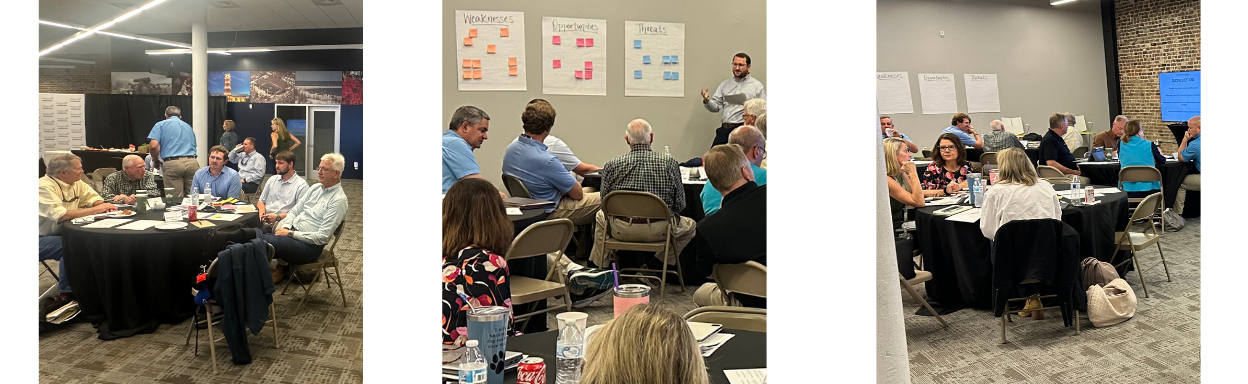
In today’s fast-moving landscape, leaders across sectors face a relentless stream of decisions: Which partnerships will yield the greatest return? How should limited budgets be allocated? When is the right time to scale, pivot, or sunset a program? Whether you're managing a manufacturing facility, leading a nonprofit coalition, or guiding a public agency, these decisions are high-stakes and rarely straightforward. That’s where a strategic plan becomes more than a document—it becomes a decision-making engine.
Why Strategic Planning Matters Across Sectors
A well-crafted strategic plan is a living framework that aligns resources with priorities, stakeholders with shared outcomes, and day-to-day actions with long-term vision.
For municipalities, it can prioritize projects that drive inclusive growth and fiscal sustainability.
For nonprofits, it can unify board, staff, and funders around mission-critical outcomes.
For manufacturers, it can guide capital investments, workforce development, and supply chain resilience.
For real estate developers, it can align community engagement, zoning strategies, and infrastructure planning.
Strategic Planning in Action: Partners for Environmental Progress (PEP) One recent standout strategic planning example is Partners for Environmental Progress (PEP), a Gulf Coast organization advancing economic growth through environmental stewardship. With 200 members spanning manufacturing, healthcare, engineering, and energy, PEP sits at the intersection of industry and conservation. “Our Delta, our Gulf, the Mobile Bay...these resources are critical to having a sustainable and happy quality of life,” said Executive Director Jennifer Denson. “It’s incredibly important that we protect these resources and make sure that we are all working together—community, elected officials, businesses—to grow in a sustainable way.”
That kind of mission requires more than passion. It demands a clear, actionable strategy. That’s why PEP engaged Steadfast City to develop a strategic plan that would reflect its collaborative ethos while delivering measurable direction. Through a blend of in-person and virtual facilitation, stakeholder interviews, and regional economic research, we co-created a plan that was both visionary and grounded.
Here’s what we delivered:
Four Strategic Benchmarks: Measurable indicators that help PEP track progress, justify funding, and align member efforts.
Comprehensive SWOT Analysis: A candid look at internal and external dynamics to inform smart, resilient strategies.
Three-Year Implementation Timeline: With clear milestones and accountability markers to ensure the plan drives action, not just aspiration.
Capacity Check and Expectations Alignment: A candid evaluation of staff and board capacity, paired with realistic expectations to ensure the plan could be executed without burnout or mission drift.
Analysis of Key Projects and Initiatives: A deep dive into PEP’s most impactful programs to determine which efforts should be scaled, refined, or sunsetted.
The Ripple Effects of Strategic Clarity
The benefits of strategic planning extend far beyond the final document: Stronger stakeholder alignment, sharper decision-making, and greater resilience and most importantly, strategic plans empower leaders to say yes to what matters—and no to what doesn’t. If your organization is navigating complexity, growth, or change, a strategic plan is a necessity. Let’s talk about how we can help you build one that drives results.

JENNIFER DENSON
Executive Director
Partners for Environmental Progress
“We put out an RFP and interviewed a couple of firms but quickly realized that Steadfast was going to be able to offer us more than a generic strategic plan. They really delved into who we are, where we are from, and really listened to us. It was a great mix of brainstorming and small group work.
Their team came up with a robust report and put us in a very strong place to use the document as a roadmap that we can implement over the next three to four years.”
Learn more
Ready to start planning your organization’s or community’s strategic roadmap? Connect with us today.