Data centers are reshaping the economic landscape of cities across the country, but the way they’re planned, communicated, and integrated into neighborhoods matters just as much as the investment behind them. When planned well, they generate billions in investment, create thousands of direct, indirect, and construction jobs, and deliver long-term tax revenue that can transform local budgets. But capturing that value requires thoughtful planning, transparent communication, and genuine alignment with community priorities.
At Steadfast City, we help cities, utilities, and developers ensure that data center investments translate into tangible economic and community outcomes. Our work includes:
Economic impact modeling that quantifies job creation, tax revenue, and long-term value
Site assessment and readiness to reduce risk and accelerate timelines
Community engagement strategies that listen and respond to and incorporate community feedback
Incentive structuring that balances competitiveness with fiscal responsibility
We’ve seen firsthand how data centers can anchor innovation districts, strengthen local tax bases, and create durable economic ecosystems.
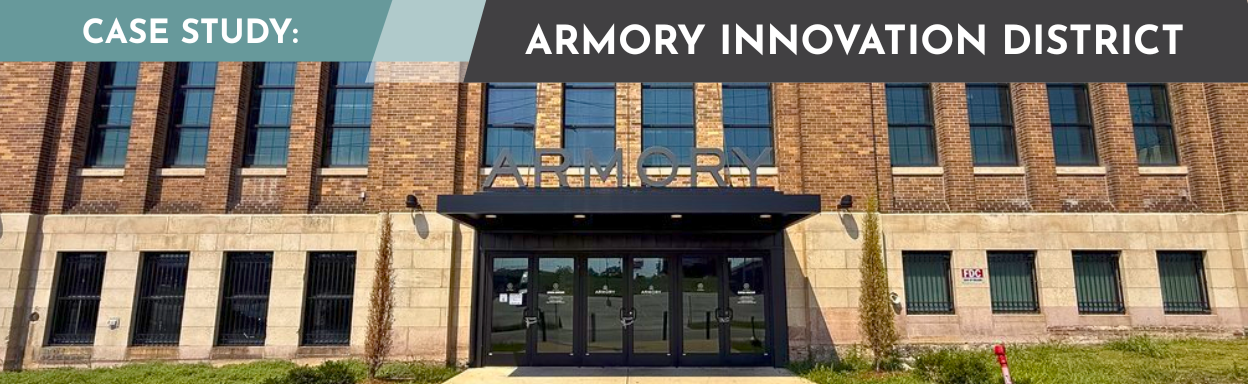
Case Study: Armory Innovation District
When an initial $600 million proposal for a data center near The Armory in St. Louis, Missouri was introduced, residents responded with clear skepticism. Concerns surfaced during two public town halls. Nearly 400 community members attended and 45 individuals voiced frustration about the project’s potential neighborhood and environmental impacts, and the lack of clarity around long-term benefits. That feedback became a turning point.
Developers and partners re-aligned the project. The result: a recalibrated $3 billion mixed‑use technology district that delivered long term investment and jobs in a sustainable and contextual way, including the redevelopment of the historic Armory building into high‑end office space, with the data center’s repurposement of an adjacent former industrial warehouse site.
The revised proposal clarified the scale and focus of the public benefit. Over the first decade, the project is projected to deliver nearly half a billion dollars in new taxes and fees, including over $230 million for St. Louis Public Schools—all without local tax incentives.
The updated plan directly addressed the core concerns raised by the community:
Energy & infrastructure: Designed for a target PUE of 1.25-1.35, with required grid and substation investments funded by the developer.
Cooling & water use: Closed-loop cooling significantly reduces ongoing water demand compared to traditional systems.
Noise and operational impacts: Generators are fully enclosed, with limited daytime testing and emergency-only use.
Community benefit: Codified in a community benefits agreement, including a $30/SF one-time contribution of $15MM to pedestrian infrastructure, digital inclusion, and mitigation of broader citywide environmental goals.
Perhaps most importantly, the process changed and evolved into a model that can be adopted into the future. The project moved away from a traditional redevelopment framework towards a focused and participatory dialogue that prioritized clarity for the developer and enforceability to community commitments—reducing risk while aligning and maintaining accountability.
Final Thoughts:
Data center development must be rooted in place, people, and long-term value. At Steadfast City, that’s the lens we bring to every project. Data centers are powerful economic engines, but they must be planned with intention: aligned with local infrastructure, integrated into community priorities, and communicated transparently from day one. If your community is exploring data center opportunities or wrestling with how to balance growth with neighborhood priorities, we’re here to help you chart a path that’s both ambitious and grounded in what your residents value most.